This week, our company’s internal AI-focused hackathon brought together nine teams to tackle real operational challenges with innovative, AI-powered solutions.
While we didn’t walk away with a prize, our team left with something even more valuable: a working AI solution that already saves time, improves consistency, and changes how we create specific types of documentation.
We introduced an AI-powered workflow that transforms one of our most fragmented and time-consuming processes into a faster, more consistent, and scalable one.
The Problem: A Manual and Fragmented Process
To deliver certain types of content, we often collaborate with external organizations. That process, however, has been anything but smooth. Pain points include:
- Scattered templates and inconsistent drafts
- Incomplete submissions, such as bullet points or screenshots
- Endless review cycles
- Team members spending hours coordinating revisions instead of adding value
As one teammate said: “I don’t feel I add much value at this stage.”
This process had been sitting in our backlog for some time, waiting for a better approach.
The Solution: Two AI Agents
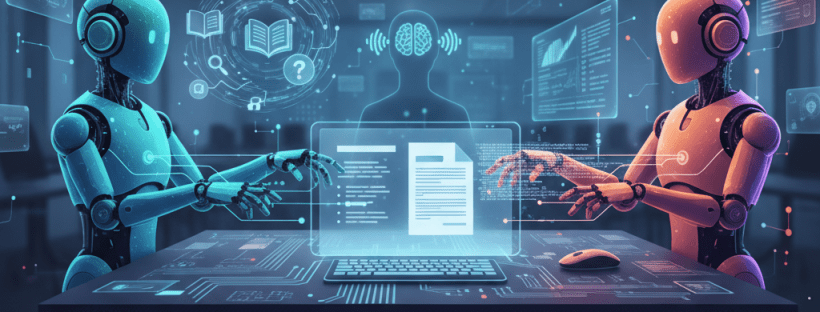
For the hackathon, we created a two-agent workflow to automate and standardize content creation.
1. The preparation agent: This agent collects the raw materials needed to build a guide. When a product owner enters the external organization’s name (and optionally a URL or file), the agent generates:
- An overview
- Suggested concepts to cover
- Recommended tasks to include
This output helps confirm the scope and identify any missing materials.
2. The drafting agent: After the prepared content is ready, this agent:
- Gathers the material to create a complete draft
- Generates a Google Doc using boilerplate content
- Separates concepts from tasks to reduce editing time
The result is a usable, structured draft in a fraction of the time it previously took.
The Impact: Hours Saved Across Teams
Even in its early stage, the feedback has been positive.
- The external-facing team will save about three hours per guide and can eliminate one handoff step entirely.
- Product teams will save 30 minutes to three hours, depending on the quality of input.
One team commented: “We’d absolutely use this as-is.”
By reducing repetitive coordination, our AI agents free up teams to focus on what matters most: accuracy, quality, and consistency.
What’s Next
We now have a solid minimum viable product and are planning the next iteration. Planned improvements include:
- Adding branching logic for more flexible document structures
- Improving content categorization and section placement
- Exploring integration with internal content systems
Our long-term vision is to create a unified, intelligent documentation workflow that transforms raw input into polished content.
Post-Hackathon Feedback: A Glimpse of the Potential
One of our favorite post-event comments captured the excitement:
“Big fan of this. It would be great to have a one-stop shop for [these guides and others] with consistent formatting and content. Give it access to the source and let it put some of those undocumented configurations and behaviors in reach of the commoner. Would be very cool!”
That is exactly what we are aiming for: turning scattered, unstructured knowledge into accessible, reliable documentation.
Final Thoughts
We may not have won the hackathon, but we built something that solves a real problem today and lays the foundation for scalable, intelligent documentation tomorrow.
These two agents don’t replace people. They remove manual overhead so teams can focus on quality, clarity, and impact.
I’d like to recognize the other teams for their creativity and inspiring ideas, and extend a special congratulations to this year’s winners for their outstanding work. It’s exciting to see what’s possible when diverse perspectives and skill sets come together around AI innovation.
 Tara English-Sweeney